Ligament surgery is not only a way to restore stability; it can also help protect the native meniscus, cartilage and alignment of the knee from damage caused by repeated giving-way. You will learn how clinicians assess that risk, when rehabilitation or surgery makes sense, and which evidence-based questions to ask before choosing treatment.
Key takeaways
- Native cartilage, menisci and viable ligament tissue support joint preservation.
- Repair suits selected ligament injuries; reconstruction replaces a damaged ligament with a graft.
- Rehabilitation can restore stability when surgery is not the best first option.
- Compare imaging, surgical indications and rehabilitation planning before choosing care in Bangalore.
How ligament treatment protects the native knee
Joint preservation treatment in Bangalore means keeping your own cartilage, menisci and viable ligament tissue instead of replacing the knee joint. The aim is to restore stability while protecting the structures that absorb load and guide movement.
Repeated giving-way causes twisting episodes that can tear the meniscus, including a meniscocapsular ramp lesion, injure cartilage and alter how force travels through the knee. Reconstruction reduces symptomatic instability but does not guarantee prevention of osteoarthritis; meniscus preservation, alignment, strength, body weight and activity load also matter.
Clinicians distinguish the suspected injury by combining the mechanism, swelling pattern, range of motion, gait and activity goals with examination findings:
- ACL injury: Lachman and pivot-shift tests assess forward translation and rotational instability.
- Meniscus injury: joint-line tenderness, catching and pain with loaded rotation raise concern.
- Medial or lateral collateral-ligament injury: valgus or varus stress tests assess side-to-side stability.
- PCL injury: the posterior-drawer test checks backward movement of the shin.
- Patellar instability: patellar apprehension and tracking tests assess kneecap displacement.
- Cartilage damage or combined trauma: persistent swelling, locking, bruising or instability may indicate associated injury.
X-rays assess fracture, alignment and skeletal maturity. MRI maps the ligaments, menisci, cartilage and bone, but cannot decide treatment by itself. Age, sport, symptoms, alignment and tissue quality matter as much as the MRI label.
What happens from the first consultation to ligament surgery
The knee ligament surgery Bangalore process begins with confirming which structures are injured, not with an MRI label alone. The joint preservation in Bangalore knee ligament surgery process combines your injury history, previous treatment, examination, standing X-rays and MRI review.
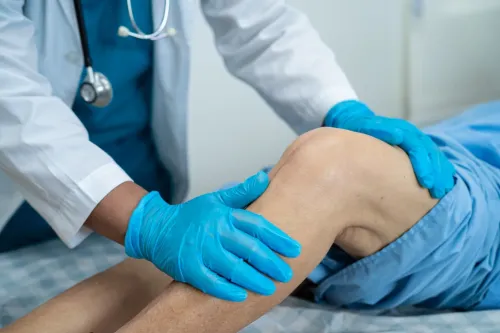
1. At consultation, describe the injury mechanism, giving-way episodes, swelling, work and sport demands, medicines, physiotherapy and any prior injections or surgery. The surgeon checks gait, swelling, range of motion, full extension, flexion, tenderness and stability with Lachman and pivot-shift tests.
2. Standing or weight-bearing X-rays show fracture, alignment and joint-space changes. MRI maps the ACL or other ligament alongside meniscal root tears, cartilage defects, posterolateral-corner injury and hidden bone damage. The plan changes for a fracture, multiligament injury or combined trauma rather than an isolated tear.
3. Prehabilitation reduces swelling, restores full extension, improves flexion and activates the quadriceps. Operating on a stiff, swollen knee raises concern about postoperative stiffness, so motion can influence the surgical date.
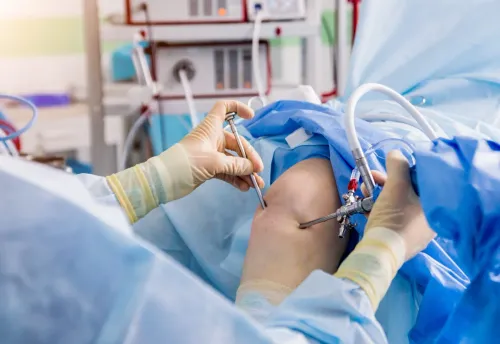
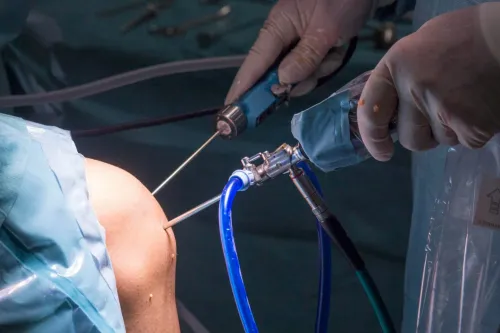
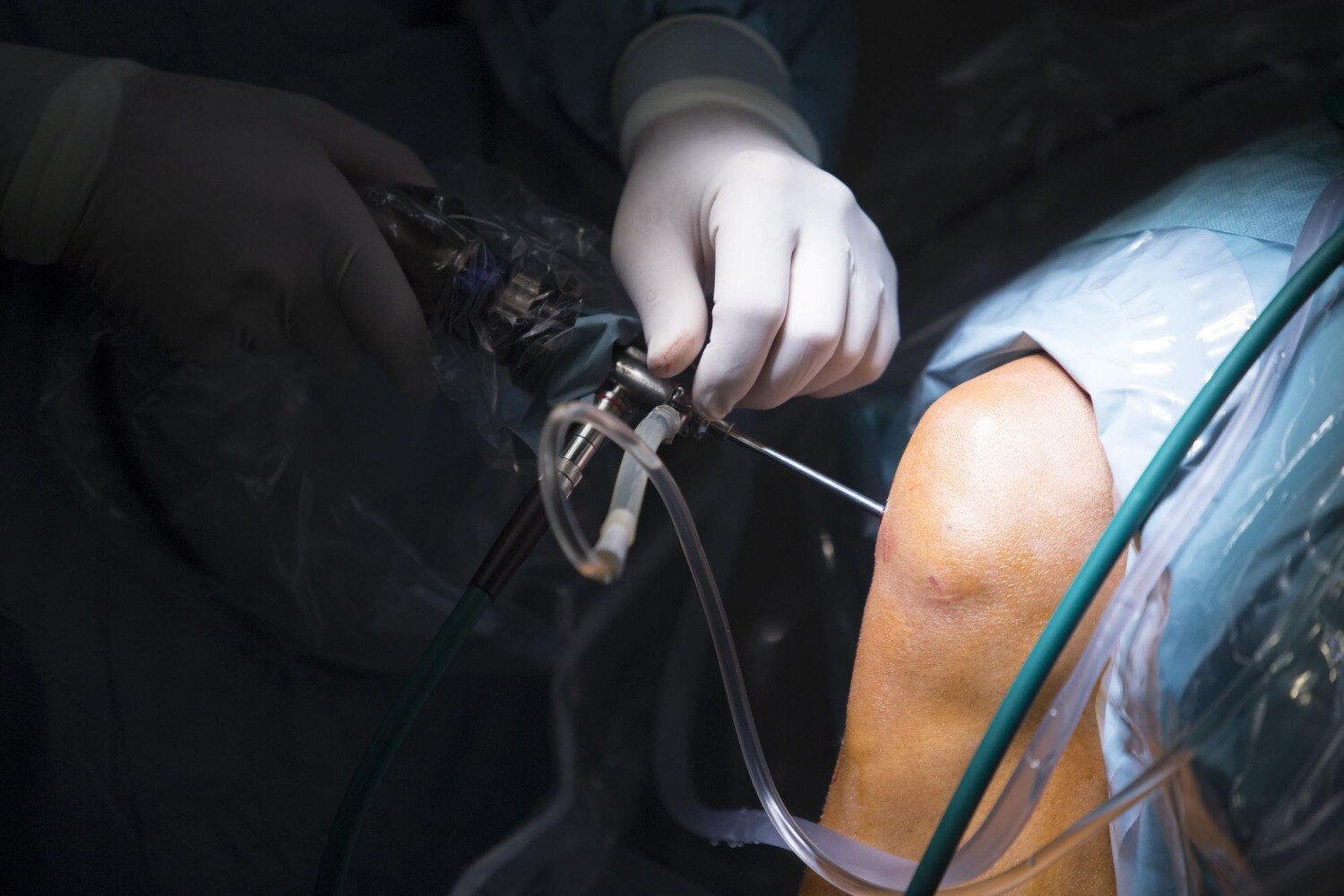
4. Under anaesthesia, the surgeon confirms stability, then makes small arthroscopic portal incisions. Repairable meniscal or focal cartilage injuries are treated, followed by bone-tunnel creation, graft passage and fixation when reconstruction is required.
5. The portals are closed and you receive instructions for pain control, exercises, wound care, brace use, crutches and review. Weight-bearing, brace duration and driving restrictions depend on the structures repaired or reconstructed; “ACL surgery” alone does not determine them.
Repair, reconstruction or rehabilitation: which route fits?
Primary ACL repair suits a proximal tear or avulsion with good-quality tissue, appropriate timing and a repairable attachment. A midsubstance tear more commonly needs reconstruction, in which the damaged ligament is replaced with a tendon graft. The knee ligament repair process therefore differs from reconstruction.
Tear location, tissue quality, the specific ligament, skeletal maturity and associated injuries all influence the choice.
| Graft option | Main trade-off | Typical consideration |
|---|---|---|
| Bone–patellar tendon–bone autograft | Strong bone-to-bone fixation; possible kneeling pain or anterior-knee pain | Active patients needing reliable fixation |
| Hamstring autograft | Less anterior-knee irritation; possible hamstring weakness | Suitable when preserving the patellar tendon matters |
| Quadriceps tendon autograft | Large graft with another harvest site; possible front-thigh weakness | Useful when hamstring or patellar-tendon harvest is less suitable |
| Allograft | No donor-site wound; slower biological incorporation and higher failure concern in young, active patients | AAOS guidance supports autograft over allograft for active patients because failure risk is lower |
- Non-operative care can fit a partial tear, a stable knee, lower physical demands or someone willing to avoid cutting and pivoting sports. It combines physiotherapy, strength and neuromuscular training, activity modification, bracing when indicated and objective return-to-sport testing.
- Surgery becomes more compelling after recurrent giving-way, inability to perform desired activities, combined ligament or meniscus injuries, or threatened meniscus and cartilage.
- Rehabilitation is not a lesser option: it tests whether stability, strength and movement control return without reconstruction. If instability persists, reconstruction may better protect the knee during demanding activity.
Knee surgery recovery steps that support joint preservation
Recovery starts by reducing pain and swelling, restoring full knee extension, and protecting any repair. These knee surgery recovery steps create the conditions for preserving cartilage, meniscal tissue and the reconstructed ligament.
- Control pain and swelling with the prescribed medication, ice and elevation. Persistent swelling can inhibit the quadriceps and delay motion.
- Regain full extension early, then increase flexion progressively under physiotherapy guidance. A stiff knee can compromise walking and later strength.
- Activate the quadriceps with exercises such as straight-leg raises when cleared. Loss of quadriceps control makes the knee unstable during walking.
- Walk using the prescribed brace and crutches, following the stated weight-bearing limit. Isolated ACL reconstruction may allow earlier weight-bearing; meniscal repair, cartilage treatment or multiligament reconstruction often requires longer protection.
- Attend follow-up reviews to check wounds, swelling, range of motion, gait and strength before advancing activity.
Protecting a repairable meniscus can lengthen rehabilitation compared with partial meniscectomy. Keeping that tissue is valuable because it helps distribute load and manage contact stress.
Return to running or pivoting sport depends on evidence, not a calendar date. Your clinician should confirm near-normal range of motion, no significant effusion, near-symmetrical strength, satisfactory single-leg and hop performance, controlled movement, psychological readiness and completion of sport-specific progression.
Six to nine months or longer is common before unrestricted pivoting sport; additional repairs, cartilage damage, delayed motion or poor strength extend it.
Long-term preservation also requires managing body weight and training load while preventing recurrent instability.
How to compare ligament-preserving care in Bangalore
Compare knee ligament surgery in Bangalore by the plan’s diagnosis-linked details, not by claims that one clinic is “best.” Ask whether the clinician regularly treats ligament-preserving cases, reviews your actual X-rays and MRI images, examines your knee personally, and explains why repair, reconstruction or rehabilitation fits your injury.
| Ask about | What a useful answer includes |
|---|---|
| Repair or reconstruction | Tear location, tissue quality, timing, ligament involved and associated injuries |
| Graft and fixation | Proposed graft, reason for choosing it, fixation method and donor-site trade-offs |
| Rehabilitation | Prehabilitation, supervised sessions and objective tests for return to running or sport |
| Daily restrictions | Expected limits on work, driving, weight-bearing, brace use and crutches |
Confirm how the team would manage a repairable meniscus, cartilage defect, malalignment or an unrecognised combined injury. Preserving a repairable meniscus can require longer protection than partial meniscectomy, but removing tissue increases contact stress.
Ask these practical safety questions:
- Which infection-prevention measures are used before and during surgery?
- When are the first follow-ups, and who answers urgent calls after discharge?
- What happens if swelling persists, extension is lost or motion stops progressing?
- Which strength, hop, movement-control and psychological-readiness tests determine return to sport?
For joint preservation treatment in Bangalore, a consultation with Dr Akshay Dhanda in Jayanagar is best evaluated through these same questions: look for clear alternatives, measurable rehabilitation milestones and a plan that accounts for every injured structure, rather than a generic promise of preservation.
Related services
Knee Ligament Surgery Dr. Akshay Danda Knee ligament injuries can occur due to sports activities, sudden twisting movements, falls, or accidents. View service → |
ACL Reconstruction Surgery Advanced ACL Reconstruction Surgery with Dr. Akshay Dhanda An **ACL (Anterior Cruciate Ligament) injury** can significantly affect knee stability,... View service → |
Frequently asked questions
How does ligament treatment protect the native knee?
It aims to restore stability while preserving your own cartilage, menisci and viable ligament tissue rather than replacing the knee joint.
What happens before knee ligament surgery?
The process includes a consultation, examination, imaging review, diagnosis, treatment comparison and surgical planning when an operation is appropriate.
Should you choose ligament repair, reconstruction or rehabilitation?
The choice depends on the injured ligament, tear location, tissue quality, knee stability, activity goals and response to rehabilitation.
What are the key knee surgery recovery steps?
Recovery involves protecting the repair or graft, controlling swelling, restoring movement, rebuilding strength and progressing activity under rehabilitation guidance.
Related service
Knee Arthroscopy (Keyhole Surgery) Knee Arthroscopy (Keyhole Surgery) ## Knee Arthroscopy (Keyhole Surgery) – Dr. Akshay Danda Knee Arthroscopy, commonly known as Keyhole Surgery, is a minimally invasive procedure used... View service → |
Keywords