A scan showing a meniscus tear, cartilage defect, or ligament injury does not decide the operation by itself. The right choice depends on your symptoms, examination, imaging, activity goals, joint damage, and willingness to complete rehabilitation; the sections below show how to compare non-surgical care, arthroscopy, reconstruction, realignment, and replacement.
Key takeaways
- True locking and lost motion need prompt assessment.
- MRI findings must match your symptoms before surgery is chosen.
- Arthroscopy suits selected problems; arthritis often needs a different plan.
- Ask about alternatives, expected recovery, risks and rehabilitation before agreeing.
Which knee problems justify arthroscopy, and which need another plan?
True locking—an inability to fully straighten the knee—deserves more urgent assessment than painless clicking or occasional catching. Recurrent swelling, focal joint-line pain, giving way, and loss of motion strengthen the case for a structural problem; pain only after activity needs a broader assessment.
| Finding or diagnosis | Possible plan | Why it matters |
|---|---|---|
| Repairable meniscus tear, displaced loose body, selected cartilage lesion | Arthroscopy | Offers a clear target for repair or removal |
| Septic joint or selected ligament procedure | Arthroscopic washout or treatment | Delay can damage the joint or prolong instability |
| Degenerative meniscus tear with osteoarthritis | Exercise-based care first | MRI abnormality alone does not justify keyhole knee surgery |
| Advanced osteoarthritis or severe surface wear | Osteotomy, partial replacement, or total replacement | These address alignment or damaged joint surfaces |
Arthroscopy cannot reverse established osteoarthritis. Routine lavage or debridement for osteoarthritis does not reliably improve pain or function compared with physiotherapy and other non-operative care.
For a ligament injury, structured rehabilitation may be enough. ACL reconstruction becomes more reasonable with recurrent instability, pivoting-sport goals, associated meniscus or cartilage damage, and commitment to months of rehabilitation.
Begin with strength-focused physiotherapy, weight management where appropriate, pain relief, and activity adjustment when no treatable mechanical lesion is evident. Osteotomy corrects overload from limb alignment; partial or total replacement resurfaces worn compartments or the whole joint. These are different operations, not larger versions of arthroscopy.
A consultation about orthopedic surgery in Bangalore should therefore match the exact diagnosis to the proposed knee arthroscopy or other surgery, rather than treating “keyhole” as the decision.
What tests should come before choosing the operation?
Choose the test that can change the operation, not every test available. For chronic knee pain, weight-bearing plain X-rays are often first because they show joint-space loss, bone changes, and deformity. Add a long-leg alignment X-ray when one compartment is overloaded or osteotomy is being considered.
MRI becomes useful when X-rays do not explain the symptoms and the result could confirm a repairable meniscus tear, cartilage lesion, loose body, or ligament injury. A diagnostic injection can test whether pain comes from inside the knee when examination and scans disagree, but it does not repair the cause.
- Diagnostic arthroscopy inspects the joint to find a cause; therapeutic arthroscopy treats a confirmed target.
- Do not use diagnostic arthroscopy as the automatic next test for unexplained pain. It still carries anaesthetic, infection, clot, bleeding, stiffness, nerve, blood-vessel, and persistent-pain risks.
- For an ACL tear, inspection alone is not reconstruction. Reconstruction requires graft selection, accurately placed bone tunnels, fixation, and months of rehabilitation.
| Test | Finding sought | Possible treatment decision |
|---|---|---|
| Weight-bearing X-ray | Joint-space loss, bone change, deformity | Non-operative care, osteotomy, or replacement |
| Long-leg alignment X-ray | Whole-leg loading pattern | Whether osteotomy could correct overload |
| MRI | Meniscus, cartilage, loose body, or ligament lesion | Repair, removal, reconstruction, or no operation |
| Diagnostic injection | Pain arising from the knee joint | Whether to investigate another pain source |
Ask what each test is expected to change, and what treatment follows if the scan is normal. That question matters whether you are comparing orthopedic surgery in Bangalore or care elsewhere.
How do arthroscopy, open surgery, reconstruction, and replacement compare?
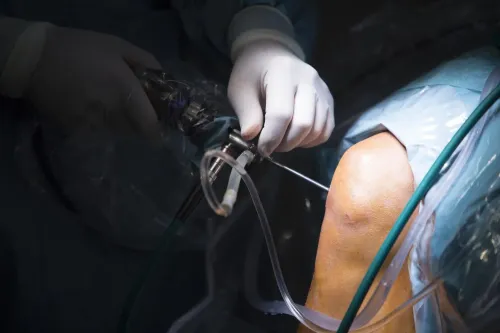
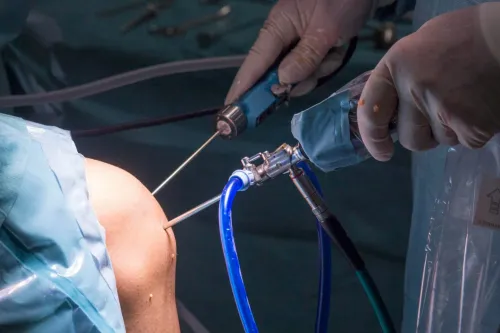
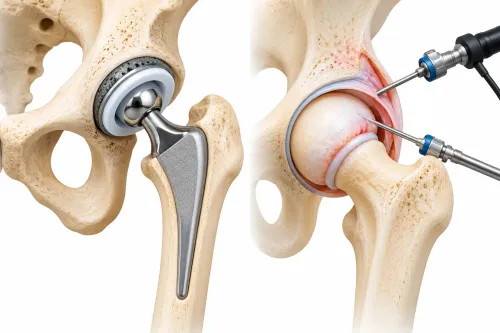
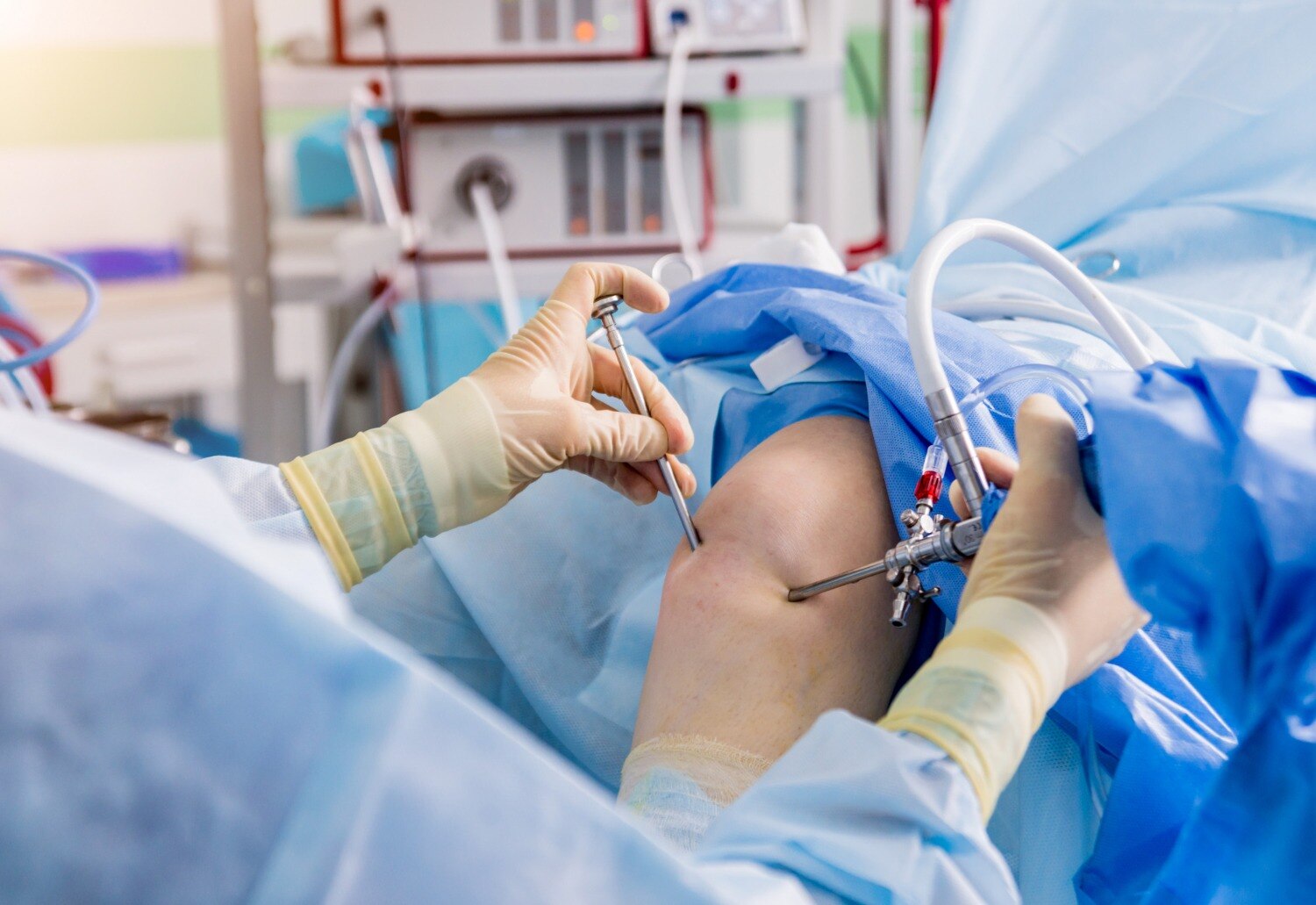
Compare the operation by its target, not the size of its incision. Arthroscopy uses portals, a camera, and instruments to view and treat selected problems inside the joint with less skin and muscle disruption. Open surgery gives direct access when portals are unsafe or realignment and replacement are required.
| Option | Main target | Typical trade-off |
|---|---|---|
| Arthroscopy | Meniscus, loose body, selected cartilage lesion, or washout | Close visual access, but not automatically minor or complication-free |
| Open surgery or osteotomy | Realignment, complex repair, or compartment overload | Larger access and greater tissue disruption; changes how load passes through the leg |
| Reconstruction | A failed ligament, such as the ACL | Graft fixation and months of rehabilitation before pivoting sport |
| Replacement | Worn bone and cartilage | Resurfaces the joint; arthroscopy cannot reverse advanced joint-surface damage |
A repairable meniscus tear is usually preserved because removing tissue increases contact stress and later degeneration. Repair often means crutches, restricted weight-bearing, limited range of motion, and longer protected physiotherapy than partial meniscectomy; removing unstable tissue can allow earlier walking but sacrifices shock-absorbing tissue.
Cartilage treatment and ACL reconstruction impose different restrictions again. A simple diagnostic procedure or partial meniscectomy may allow earlier desk work and driving than repair, cartilage treatment, or reconstruction.
Before agreeing, ask how the exact procedure affects incision, visual access, anaesthesia, pain control, complication risk, crutches, weight-bearing, stairs, desk work, physiotherapy, running, and pivoting sport. A search for knee arthroscopy Bangalore should lead to a procedure-specific recovery plan, not a promise based on the phrase “keyhole surgery.”
What should you ask at a knee surgery consultation before agreeing?
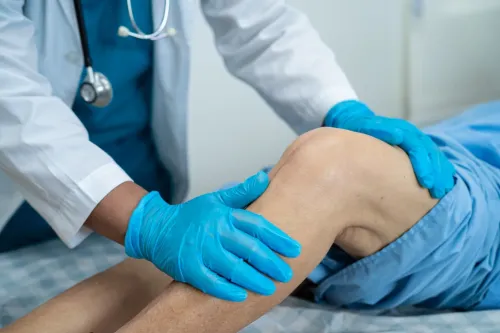
A knee surgery consultation Bangalore checklist should establish three facts: the exact diagnosis, the structure causing symptoms, and the purpose of surgery. Ask which examination findings and imaging support it, whether the recommendation changes if the MRI finding is degenerative, and what happens if you defer treatment.
Ask these questions before agreeing:
- What non-operative option is reasonable, and for how many weeks should I try it?
- What planned procedure will you perform if the findings differ?
- Can you preserve the meniscus or cartilage, and what finding would trigger conversion to another operation?
- Who is the surgeon, which hospital will be used, and when will anaesthesia review occur?
- What is the complete follow-up schedule, and which physiotherapy providers are available?
- When can I walk, climb stairs, drive, work, run, and return to pivoting sport?
Compare the whole burden, not just the procedure fee:
| Option | Compare before choosing |
|---|---|
| Non-operative care | Physiotherapy visits, exercises, travel, time, and the consequence of delaying surgery |
| Arthroscopy or repair | Weight-bearing restrictions, rehabilitation length, time away from work or sport, and possible later surgery |
| Reconstruction or replacement | Longer rehabilitation, hospital arrangements, restrictions, and the different target of the operation |
For orthopedic surgery in Bangalore or a knee arthroscopy Bangalore provider, ask which imaging result would justify a different operation.
Dr Akshay Dhanda is one local option for discussing these decisions in Jayanagar, Bengaluru; judge the clarity of the plan, not the phrase “keyhole.” Seek a second opinion when pain lacks locking, instability, or a clearly correctable lesion, or when benefit and rehabilitation remain unclear.
Related services
Knee Arthroscopy (Keyhole Surgery) Knee Arthroscopy (Keyhole Surgery) ## Knee Arthroscopy (Keyhole Surgery) – Dr. Akshay Danda Knee Arthroscopy, commonly known as Keyhole Surgery, is a minimally invasive procedure used... View service → |
Knee Ligament Surgery Dr. Akshay Danda Knee ligament injuries can occur due to sports activities, sudden twisting movements, falls, or accidents. View service → |
How should you prepare for recovery, and when is a complication urgent?
Recovery depends on the operation, not simply on the label keyhole knee surgery. A diagnostic arthroscopy or partial meniscectomy usually allows earlier walking than meniscus repair, cartilage treatment, or ACL reconstruction, which need longer protection before running and pivoting sport.
- Give the surgical and anaesthesia teams a complete medication list, including aspirin, anticoagulants, diabetes medicines, supplements, and allergies. Follow their fasting instructions exactly. Arrange transport home and another adult’s help for the first 24 hours.
- Plan work around crutches, weight-bearing limits, swelling, exercises, and physiotherapy. A desk job and work involving stairs, prolonged standing, or lifting need different timelines; ask for dates specific to your procedure.
- Do not drive until you can control the vehicle, perform an emergency stop, and meet the surgeon’s and insurer’s requirements. Pain, weakness, restricted movement, or sedating medicines can make driving unsafe.
- Judge recovery by milestones, not elapsed time: full knee extension, controlled swelling, restored strength, neuromuscular control, and procedure-specific testing. ACL reconstruction requires months of rehabilitation before pivoting sport, even when walking improves sooner.
Confirm the risks before consent: infection, clot, bleeding, stiffness, persistent pain, nerve or blood-vessel injury, anaesthetic complications, and failed meniscus repair or ligament reconstruction.
Contact the surgical team urgently for fever with worsening wound redness, new calf swelling or pain, chest pain, breathlessness, a cold or pale foot, or a suddenly locked or severely swollen knee.
Frequently asked questions
Which knee problems justify arthroscopy?
Arthroscopy can suit selected meniscus tears, loose bodies, cartilage problems and injuries causing true locking, recurrent swelling or persistent mechanical symptoms. Painless clicking alone rarely justifies surgery.
What tests should come before knee surgery?
Assessment usually starts with a physical examination and weight-bearing X-rays. MRI helps assess menisci, ligaments and cartilage when symptoms and examination suggest internal damage; the scan must match the symptoms.
How do arthroscopy, open surgery, reconstruction and replacement differ?
Arthroscopy uses small portals and a camera for selected internal knee problems. Open surgery uses a larger incision, reconstruction restores a damaged ligament, and replacement resurfaces arthritic joint surfaces. The diagnosis determines the appropriate option.
What should you ask during a knee surgery consultation?
Ask for the exact diagnosis, the purpose of surgery, non-operative alternatives, expected benefit, risks, rehabilitation timeline, time away from work or sport, and what happens if you do not have the operation.
When is a knee surgery complication urgent?
Seek urgent medical advice for chest pain, breathlessness, a cold or pale foot, uncontrolled bleeding, rapidly increasing calf swelling, fever with wound drainage, or new weakness or numbness.
Related services
ACL Reconstruction Surgery Advanced ACL Reconstruction Surgery with Dr. Akshay Dhanda An **ACL (Anterior Cruciate Ligament) injury** can significantly affect knee stability,... View service → |
Joint Replacement Surgery Dr. Akshay Danda **Joint Replacement Surgery** is an orthopaedic procedure performed to replace a severely damaged or worn joint with an artificial... View service → |
Meniscus Repair & Preservation Meniscus Repair & Preservation # Meniscus Repair & Preservation The meniscus is a crescent-shaped piece of cartilage inside the knee that helps absorb shock, distribute load,... View service → |
Sports Medicine Surgery Dr. Akshay Danda **Sports Medicine Surgery** focuses on the diagnosis and surgical treatment of injuries affecting athletes and physically active... View service → |
Keywords